Updated on
Does your blood test show very high B12 levels?
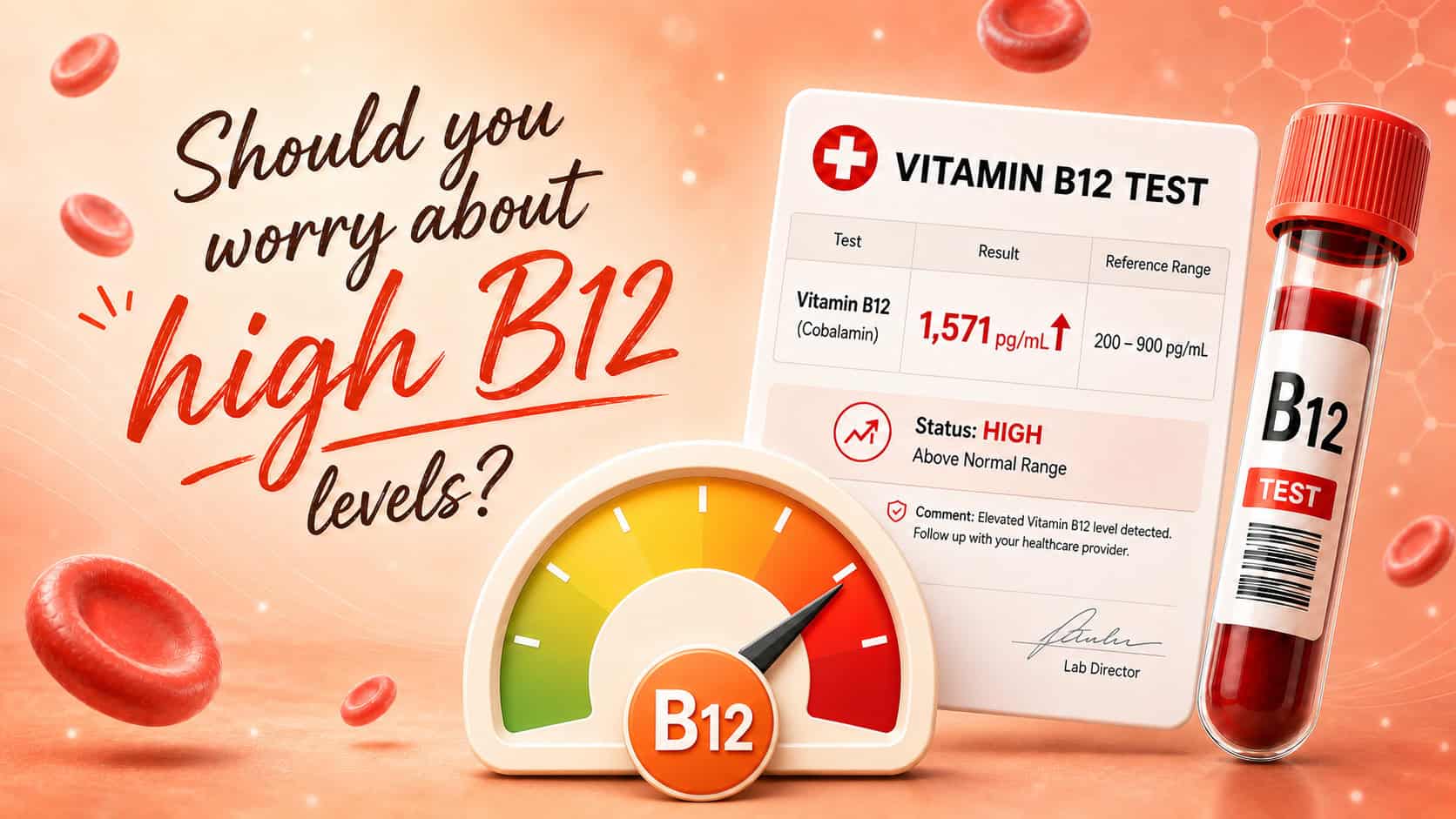
We often get emails from readers whose blood tests come back with elevated B12 levels. We’re talking levels like 1200, 1500, 2000, or even 7500 pg/mL. If your results are similar, is there any reason to worry? And what does a high vitamin B12 level even mean?
Let’s dig in.
Causes of High B12 Levels in Blood
Underlying disease
If your test shows excessive B12 levels and you are not taking any supplements, it may point to an underlying medical problem. High levels of B12, or hypercobalaminemia, can be a sign of tissue breakdown, which releases B12 back into the bloodstream. This may be due to liver or kidney disease, or certain cancers and blood disorders:
The aetiological profile of high serum cobalamin predominantly encompasses severe disease entities for which early diagnosis is critical for prognosis. These entities are essentially comprised of solid neoplasms, haematological malignancies and liver and kidney diseases. This review reflects the potential importance of the vitamin B12 assay as an early diagnostic marker of these diseases. A codified approach is needed to determine the potential indications of a search for high serum cobalamin and the practical clinical strategy to adopt upon discovery of elevated cobalamin levels. While low serum cobalamin levels do not necessarily imply deficiency, an abnormally high serum cobalamin level forms a warning sign requiring exclusion of a number of serious underlying pathologies. Functional cobalamin deficiency can thus occur at any serum level.
The pathophysiology of elevated vitamin B12 in clinical practice
Elevated levels of serum cobalamin may be a sign of a serious, even life-threatening, disease. Hematologic disorders like chronic myelogenous leukemia, promyelocytic leukemia, polycythemia vera and also the hypereosinophilic syndrome can result in elevated levels of cobalamin. Not surprisingly, a rise of the cobalamin concentration in serum is one of the diagnostic criteria for the latter two diseases. The increase in circulating cobalamin levels is predominantly caused by enhanced production of haptocorrin.Several liver diseases like acute hepatitis, cirrhosis, hepatocellular carcinoma and metastatic liver disease can also be accompanied by an increase in circulating cobalamin. This phenomenon is predominantly caused by cobalamin release during hepatic cytolysis and/or decreased cobalamin clearance by the affected liver. Altogether it can be concluded that an observed elevation of cobalamin in blood merits the a full diagnostic work up to assess the presence of disease.
SIGNIFICANCE OF ELEVATED COBALAMIN (VITAMIN B12) LEVELS IN BLOOD
Note on supplementation
High B12 levels in the blood while you’re taking a B12 supplement are normal. In other words, a high test result may reflect recent intake rather than a medical problem. This is actually one of the more common causes of high vitamin B12 levels. Keep in mind that there are no toxicity levels for B12. Your body flushes most of it in the urine while the liver, kidneys, and muscle tissues absorb the rest. Think about it this way:
When your test shows 1000 pg/mL, only about 5 μg is circulating in your blood. Have a B12-rich food like steak, and your serum level can rise to more than 1500 pg/mL for a short time. With our recommended methyl B12 injections, if you do a blood test right after a 1,200 μg shot, you’ll see around 250,000 pg/mL for a few minutes! Inject two or three times a day, and you’ll have high blood levels of B12 around the clock.
In such cases, high levels of B12 in the blood are absolutely normal.
Don’t Ignore Elevated B12 Levels
So, are your vitamin B12 levels too high? First, rule out any underlying conditions such as kidney or liver disease, cancer, or other blood disorders, as these can raise B12 levels. Timing is critical, so if you have excess B12 levels, get checked. If you find anything, the focus should be on treating that condition rather than on lowering your B12 levels.
One exception is regular B12 supplementation. In this case, expect elevated B12 blood levels. They’re not a concern as long as everything else looks normal.
Hope that’s helpful.